Policy Action
01
Pack Up Fossil Fuels
A better future for MIDI requires an immediate halt to the master plan, currently biased toward expensive and volatile LNG.
Marketed to policymakers as a blueprint for industrial growth, the Moheshkhali-Matarbari Integrated Development Initiative (MIDI) promises to reshape Bangladesh's future.
But behind that vision lies one of the country's biggest energy decisions. Explore what's at stake before it's too late.
Learn, discuss and push for change.
A closer look at MIDI and what's at stake.
Let's take a trip to Moheshkhali.
Picture the shores of Moheshkhali, surrounded by the blue waters of the Bay of Bengal. A coastline full of opportunity, now at the heart of one of Bangladesh's most ambitious fossil fuel development plans.
MIDI promises ports, industries, and economic growth.
Every master plan comes with energy choices. For MIDI, one of the biggest is liquefied natural gas (LNG).
This vision hinges on a major expansion of imported LNG–one that raises important questions about
What happens when a development plan is built around imported LNG?
Let’s unpack the plan.
What's Powering MIDI?

MIDI plans to build around 13 GW of new LNG-fired power to supply both nearby industrial zones and the national grid.
The strategy presents LNG as a key fuel for industrial growth. But unlike domestic energy resources, even a brief retrospective shows imported LNG exposes Bangladesh to the whims of volatile global markets. With LNG integrated into MIDI's energy strategy, Bangladesh would have little control over imported LNG prices or availability.
Who Pays for Imported LNG?
As Bangladesh imports more LNG, the financial burden doesn't stop at the port. It increasingly falls on public finances, taxpayers and electricity consumers.
One analysis estimates the country could spend US$1.07 billion (Tk 131.34 billion) on LNG import subsidies between April and June 2026 alone. Over the past five years, electricity generation costs have increased by 83%, as Bangladesh's dependence on imported primary energy rose from 48% to 63%, exposing the country to volatile global fuel markets. In 2023, expensive spot-market LNG also contributed to a 179% increase in gas tariffs.
What Could MIDI Cost Bangladesh in the Long Run?
The costs of LNG do not end with today's imports; they continue long after the infrastructure is built.
One report estimates LNG power plants under MIDI could require around US$2.61 billion in annual capacity payments. By 2041, Bangladesh's LNG import bill could reach US$7–11 billion every year, increasing pressure on public finances and foreign exchange reserves. Greater reliance on LNG could also lead to higher electricity tariffs, leaving fewer public resources available for other national priorities.
What the plan promises. What the evidence says.
Behind the promise of energy security lies a bigger question: is MIDI building resilience, or locking Bangladesh into new risks?

MIDI will deliver affordable, reliable energy to power Bangladesh’s industries and secure its energy future.

Expensive, volatile & crisis-prone.
Reliance on expensive imported LNG has already had a devastating effect on local consumers, driving domestic gas tariffs up by as much as 179%.
LNG will provide a stable and secure energy supply for Bangladesh.
Risky & externally dependent.
LNG does not eliminate energy risks. It shifts them to global markets. Geopolitical conflicts and supply disruptions like US–Iran tensions (or the Ukraine war that caused severe fuel shortages and power cuts across Bangladesh in 2022) demonstrate LNG is neither stable nor secure.
MIDI will drive industrial modernization, attract foreign investment, and support Bangladesh’s long-term economic growth.
Debt that results in reliance.
MIDI risks locking Bangladesh into long-term fossil fuel dependency, increasing exposure to foreign debt and financial pressure at a time when the world is accelerating its shift toward cleaner energy sources.
The blueprint relies on irreversible infrastructure commitments that could shape the country's energy choices for decades. Experts warn that investing tens of billions of dollars in fossil fuel assets risks creating stranded assets potentially leaving countries chained to long-term emissions and financial obligations.
LNG is a necessary “clean bridge fuel.” Future technologies such as co-firing, used alongside LNG, will help to reduce emissions.
A clean bridge fuel or fossil fuel lock-in?
LNG is far from a clean fuel. Projects like MIDI also sideline actual clean energy pathways, for instance, by rejecting solar-only pathways, thus ignoring cheaper, locally available renewable energy alternatives and creating long-term dependence on imported fossil fuels.
MIDI will help develop local communities, deliver jobs and livelihoods.
A heavy social and community toll.
Behind MIDI’s promise of industrial growth lies a major transformation of coastal communities.
The master plan requires up to 72,957 acres of land acquisition, affecting salt farmers, fisherfolk, and local residents whose livelihoods may not easily transition into industrial jobs. Estimates suggest potential displacement could affect 116,000 to 776,000 people.
MIDI is not the first project of its kind. Previous projects, such as Matarbari Project, are proof of what’s to come: hidden risks, sky-high costs, and environmental degradation included.
Expert Opinions & Community Voices
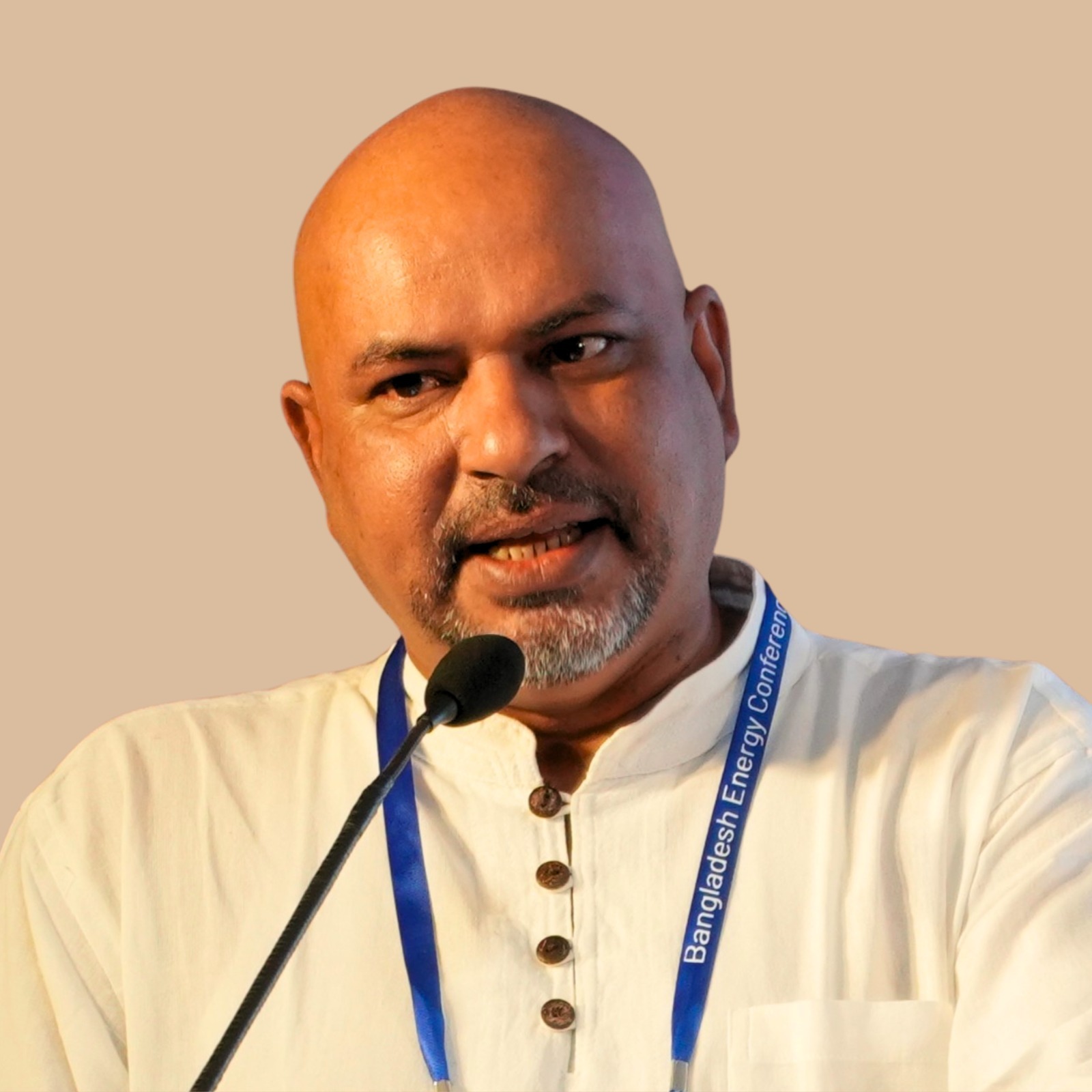
“It’s already evident that industries cannot rely solely on imported, costly LNG. Hence, for reliable electricity, we also need sustainable energy, and it must be renewable. Renewable energy is a natural solution; it doesn’t depend on global crises, and using more of it can give industries a competitive advantage.”

Expert Opinions & Community Voices
“Bangladesh Faces a Mounting LNG Debt Trap. Because under the MIDI Master Plan, payments for the capacity of the proposed LNG-based power plants could total about USD 2.61 billion annually. Over 20 years, this cost could rise to approximately USD 57.34 billion. At the same time, payments for the capacity of the terminals being built to receive and supply LNG could total about USD 82 million annually. Over 20 years, this expenditure could reach approximately USD 1.8 billion.”
A better Bangladesh energy future requires two policy shifts.
Policy Action
A better future for MIDI requires an immediate halt to the master plan, currently biased toward expensive and volatile LNG.
Policy Action
Realign excessive, unaligned energy demand forecasts based on IMF projections as well as environmental assessments, balancing industrial growth with ecological sustainability and social justice.